The Invention That Changed Documentary Theatre Forever
Imagine walking into a theatre in 1936. There's no playbill with a neat synopsis. No curtain speech explaining what you're about to see. You take your seat – probably for free, or maybe you paid a quarter – and the lights go down.
Suddenly: Projections flash across the stage. Headlines. Photographs. Government statistics made enormous. Voices shout from every direction. Actors embody data, become witnesses, and transform into the machinery of policy itself. You're watching the news become visceral, immediate, felt.
Welcome to the Living Newspaper. And in 1936, it was unlike anything American audiences had ever experienced.
A New Form is Born
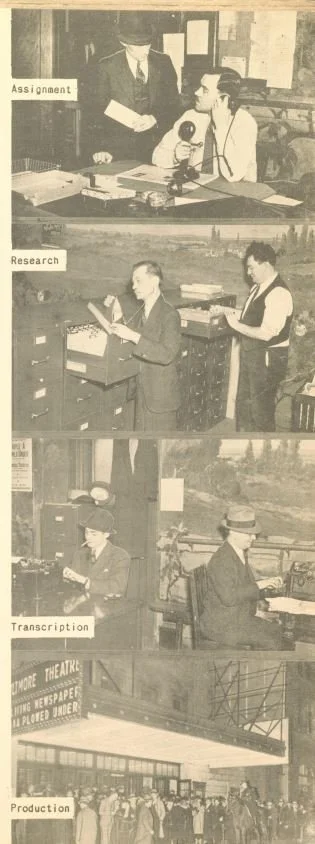
Pictured: “Editing the Living Newspaper.” Federal Theatre Vol. 1 No. 5. April 1936. Pg 16-17.
The Living Newspaper was the Federal Theatre Project's most radical innovation. Conceived by Hallie Flanagan after she witnessed similar experiments in Europe, the form became distinctly, urgently American.
The core principles were revolutionary:
All content drawn from factual sources: newspapers, government reports, interviews, statistics
Fast-paced, cinematic staging with projections, sound effects, multimedia
Focused on urgent social issues: labor, housing, agriculture, public health
Designed to inform and provoke, not just entertain
This was documentary theatre before we had a name for it. And it proved that facts could be as dramatic as fiction.
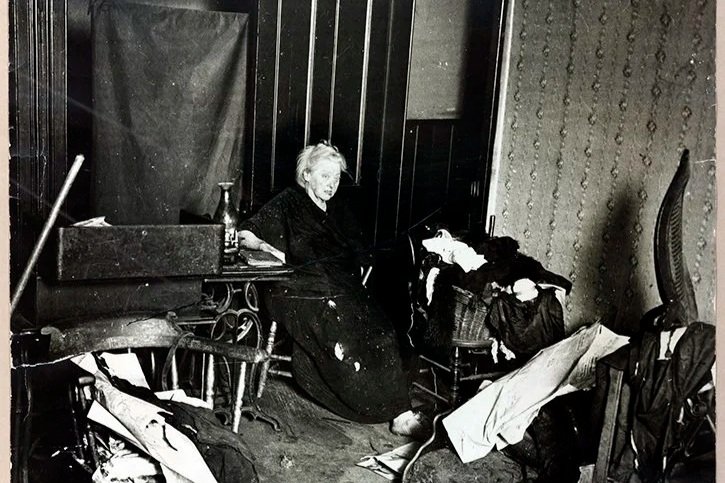
Pictured: Play research photograph of woman living amid squalor in a tenement, ca. 1938. Photograph. Federal Theatre Project Collection, Music Division, Library of Congress (069.00.00)
What It Looked Like
Triple-A Plowed Under (1936) examined the Agricultural Adjustment Act and its impact on farmers. Audiences in farming communities watched actors dramatize the exact testimonies of people like them: sharecroppers evicted, crops destroyed while families starved, government policy made tangible and human.
One audience member in Minneapolis wrote: "One woman stood up and cried when the sharecroppers were evicted in the play. I'd seen it in real life. But I'd never seen it on stage."
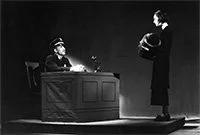
Pictured: From the New York production of the Living Newspaper Triple A Plowed Under. Jane Johnson (Mrs. Sherwood) confessing to James Bradleigh (the police lieutenant) that she has drowned her baby because she couldn't afford to feed it. Federal Theatre Project Collection
Power (1937) tackled the politics of public utilities, featuring the controversial Tennessee Valley Authority. The staging included massive projections, choreographed movement representing electrical currents, and actors embodying both consumers and corporations. Students wrote that it was the most educational experience they'd had in school. A high school principal in Boston wrote to Hallie: "Your play on the utility companies was the most stimulating material our students have encountered this year."
One-Third of a Nation (1938) explored housing conditions and the tenement crisis. The title came from FDR's second inaugural address: "I see one-third of a nation ill-housed, ill-clad, ill-nourished." The production featured a massive tenement set that caught fire every single night. Audience members muttered "that's my building" during the fire scene. The FTP stage manager noted it in their log.
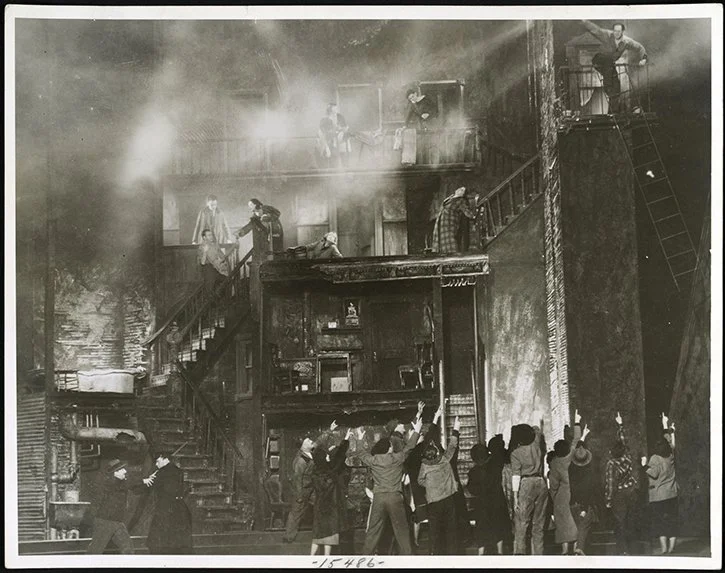
Pictured: Scene from One-Third of a Nation, 1938. Photograph. Federal Theatre Project Collection, Music Division, Library of Congress (068.00.00)
Why It Mattered
The Living Newspaper made theatre accessible to people who had never imagined it was for them. A Cleveland student who attended a free performance of Alice in Wonderland remembered decades later: "I'd never been to a play. They let us in for free. I still remember the Queen of Hearts screaming. Magic!"
But it wasn't just children's shows. The Living Newspaper brought urgent political questions to audiences who were living those questions. Farmers in Des Moines saw the New Deal policies affecting their lives dramatized on stage. A teacher there wrote: "My students – mostly sons of farmers – were stunned. They didn't know the New Deal was doing anything for them until they saw it acted out."
This was education through embodied experience. Theatre as civic participation. Art that assumed audiences were smart enough to grapple with complex policy questions if you made those questions human and immediate.
Playwright Arthur Miller, who worked for the FTP as a young writer, called the Living Newspaper "the one big invention of the theatre in our time." It launched his career. It launched Orson Welles's career. And it established a uniquely American prospective on forms that had been developing in Europe.
Why It Was Dangerous
But The Living Newspaper also made powerful enemies.
When Ethiopia was shut down in 1936 for depicting Mussolini and Emperor Haile Selassie, it revealed the government's fear of theatre that engaged with foreign policy. Director Elmer Rice resigned in protest. Hallie stayed – not for herself, but for the thousands of artists depending on the program.
When Injunction Granted (1936) presented labor conflicts from a pro-union perspective, it confirmed conservatives' suspicions that the FTP promoted "radical" politics. Never mind that the play used actual court transcripts and newspaper accounts. Facts presented from a worker's perspective looked radical to those in power.
Hallie later reflected: "Enemies made by the living newspaper were, I believe, powerful enemies, instrumental in the final closing of the project."
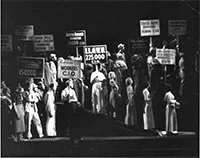
Pictured: Injuction Granted portrayed the struggle of labor in the courts. Federal Theatre Project Collection
The form that proved theatre could educate, illuminate, and activate civic participation was precisely why politicians wanted the FTP destroyed. Art that helps people understand policy is art that threatens those who benefit from confusion.
The Legacy
The Living Newspaper's DNA runs through contemporary documentary theatre. The Laramie Project. Twilight: Los Angeles. The Exonerated. Anna Deavere Smith's work. Tectonic Theater Project. Every verbatim theatre piece that transforms testimony into performance owes something to what the FTP invented.
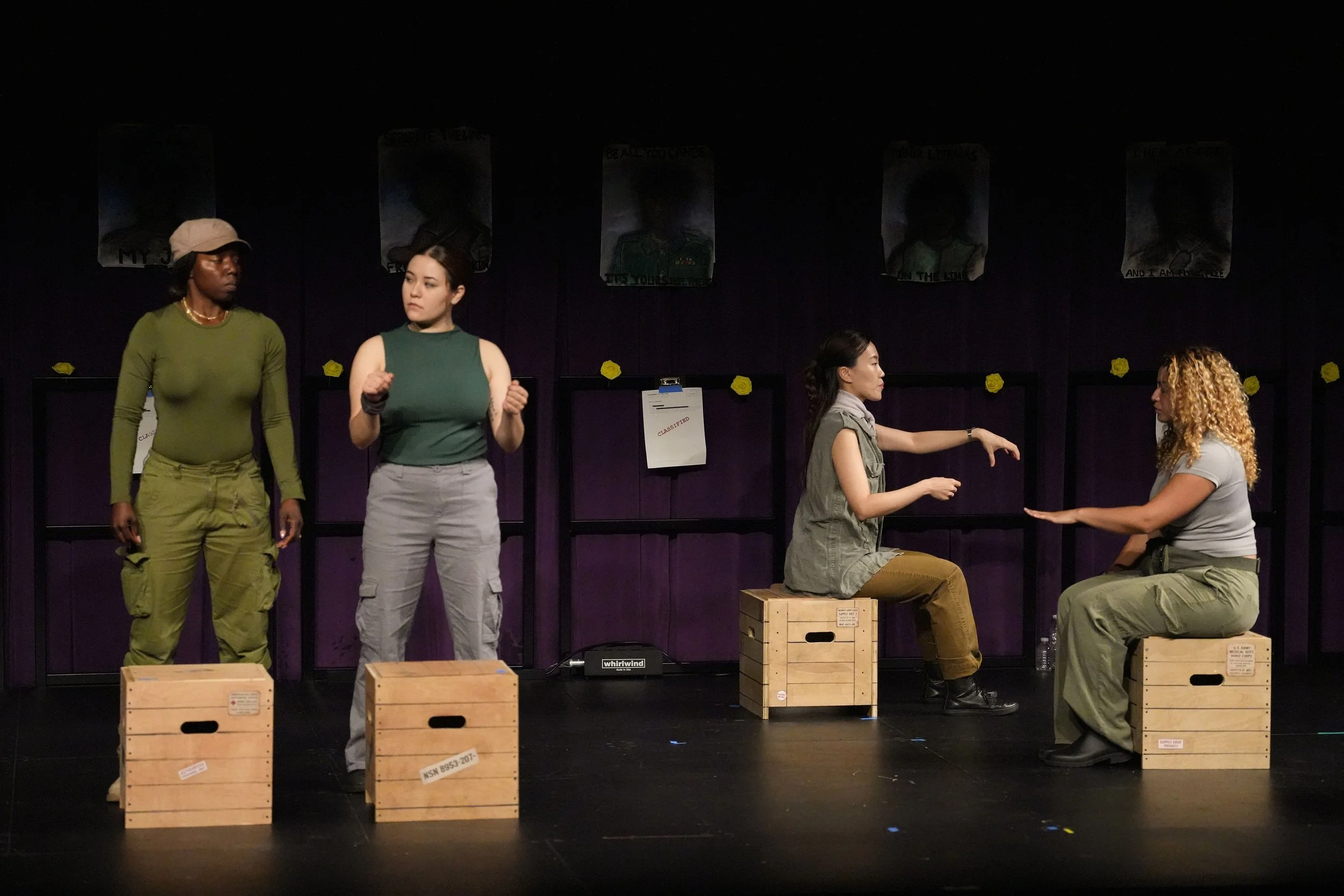
Pictured: 2025 production of In Their Footsteps at The Bronx Music Hall. Image by Captured Beauty Studio.
At Infinite Variety Productions, we carry this legacy directly. Our breakout piece In Their Footsteps uses only the exact words from oral histories of five women who served in Vietnam. No invented dialogue. No fictional embellishment. Just their testimonies, transformed into immersive theatre. That's the Living Newspaper's inheritance.
And now we're bringing the story full circle. Our 2026 production about Hallie Flanagan and the Federal Theatre Project uses the very documentary techniques she pioneered to tell her story. We build our script from Hallie's own words in speeches, letters, testimony, and her memoir Arena. We use primary sources to illuminate a woman who believed primary sources could change the world.
Why Now
We live in an era of "fake news" accusations, media literacy crises, and debates about whose facts count. The Living Newspaper asked: What if we made facts theatrical? What if we trusted audiences to think critically about urgent issues?
Those questions haven't been answered; they've been abandoned. Documentary theatre exists on the margins while escapist entertainment dominates. Theatre that asks audiences to think critically about policy struggles to find funding and audiences.
The FTP proved it didn't have to be this way. For four years, 30 million Americans experienced theatre that educated, challenged, and activated them. Then Congress killed it.
Our play asks: What did we lose? What could we reclaim?